
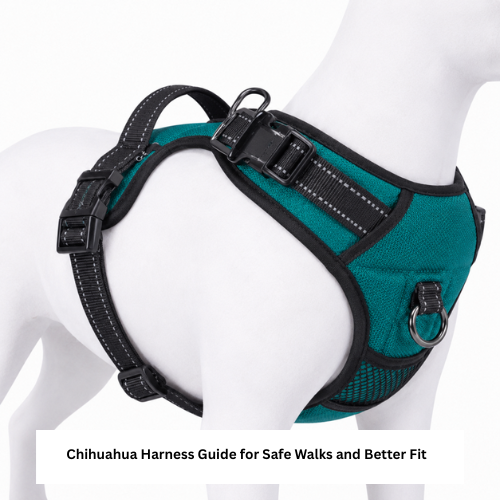
A Chihuahua harness can make daily walks safer and more comfortable when it fits the chest, shoulders, and neck area correctly. Because Chihuahuas are small and delicate, owners should check harness size, strap placement, padding, leash attachment, and adjustability before buying.
A Chihuahua harness should spread pressure across the body instead of pulling directly on the neck. Always verify the size chart, measurement guide, buckle quality, return policy, and leash compatibility before choosing a walking harness.
Why Harness Fit Matters for Chihuahuas
Chihuahuas have small frames, so a loose harness can slip off and a tight harness can rub or restrict movement. The goal is a secure fit that allows walking, sitting, turning, and breathing comfortably.
A good harness should not press into the throat, slide behind the front legs, or twist sideways during walks.
How to Choose a Chihuahua Harness
A Chihuahua harness should be selected by chest girth, neck area, weight guidance, body shape, and walking habits. Do not choose only by breed label because some Chihuahuas are smaller, longer, or broader than others.
Before buying, check:
- Chest girth measurement
- Neck opening
- Strap adjustability
- Soft lining or padding
- Buckle placement
- Leash ring position
- Step-in or over-head design
- Escape-resistant fit
- Wash care
- Return policy
| Harness Type | Best For | Buyer Benefit | Limitation | Verify Before Buying |
| Step-in harness | Calm walkers | Easy for some dogs to wear | May not suit escape-prone dogs | Chest fit and strap placement |
| Vest harness | Daily comfort | More body coverage | Can feel warm in hot weather | Fabric and breathability |
| No-pull harness | Training support | Helps guide movement | Fit must be exact | Front clip and adjustment points |
| Soft harness | Sensitive dogs | Reduces rubbing | May stretch over time | Material and stitching |
| Puppy harness | Growing dogs | Lighter fit for young pups | Outgrown quickly | Adjustment range and return policy |
Chihuahua Harness Size and Fit Checks
Measure your Chihuahua around the widest part of the chest, usually behind the front legs. Also check neck opening if the harness goes over the head.
A Chihuahua harness size guide can help owners compare chest measurements, neck fit, and adjustment ranges before buying.
A proper fit usually allows comfortable movement without gapping, twisting, or rubbing. If your dog backs out of the harness, stop using it and check sizing again.
Small Dog Harness and Walking Comfort
A small dog harness should feel lightweight and secure. Chihuahuas may dislike bulky straps, rough seams, or heavy hardware.
A small dog harness category can help owners compare harness styles made for small breeds and toy-size dogs.
For product comparison, review small dog harness options and verify size chart, chest fit, leash ring, buckle placement, material, and return policy before buying.
No-Pull and Training Use
A no-pull design may help guide dogs that lunge or pull, but it is not a substitute for training. The harness must fit correctly to avoid rubbing or uneven pressure.
A no pull Chihuahua harness may be useful for walking practice, but owners should verify clip placement, adjustment points, and comfort before buying.
For strong pullers or nervous dogs, consider professional training support and avoid harsh corrections.
Teacup and Puppy Harness Notes
Very small Chihuahuas and puppies need extra careful sizing. A harness that is slightly too loose may slip off, while one that is too tight may be unsafe.
A teacup dog harness should be checked for lightweight hardware, narrow strap placement, and secure adjustment.
A puppy harness may need replacement as the dog grows, so verify the adjustment range before buying.
Collar vs Harness Safety
A collar can hold identification, but it may not be the best tool for leash pressure on a small dog. Many owners use a collar for ID and a harness for walks.
Do not attach a leash to a collar if your Chihuahua pulls hard or coughs during walks. Ask a veterinarian if your dog shows breathing discomfort, pain, or repeated coughing.
Cleaning and Maintenance Advice
Harnesses can collect dirt, hair, sweat, and outdoor debris. Follow the care label to avoid damaging padding, mesh, or buckles.
Maintenance tips:
- Check stitching weekly
- Wash as directed
- Dry fully before use
- Inspect leash ring
- Replace cracked buckles
- Check strap adjustment often
- Store away from chewing
- Re-measure growing puppies
Common Buying Mistakes
Many owners buy a harness by weight only.
Avoid these mistakes:
- Ignoring chest measurement
- Buying too large for growth
- Choosing heavy hardware for tiny dogs
- Not checking escape risk
- Forgetting leash compatibility
- Ignoring rubbing behind the legs
- Skipping return policy
Troubleshooting Harness Problems
If the harness twists sideways, it may be too loose or the leash ring may sit poorly. If your Chihuahua refuses to walk, check whether the harness rubs under the legs or presses near the neck.
If your dog slips out, stop using the harness until you adjust or replace it. If fur mats under the straps, check fit and grooming needs.
Practical Buying Checklist
Before buying, confirm:
- Size or fit: Chest, neck, and adjustment range match your Chihuahua
- Compatibility: Works with your leash, walking style, and dog’s body shape
- Safety: Harness does not press on the throat or restrict movement
- Material or build quality: Straps, mesh, stitching, buckle, and leash ring look reliable
- Setup or installation: Easy to put on, adjust, and remove
- Maintenance: Wash care and inspection steps are clear
- Warranty: Verify before buying if listed
- Return policy: Check before ordering
- Replacement parts: Verify buckles, clips, straps, or matching leash details if listed
- Delivery or support: Confirm arrival before training or travel needs
- Verify before buying: Do not assume breed size, no-pull performance, or escape resistance
Conclusion
A Chihuahua harness should fit securely, feel lightweight, and support safe daily walks without neck pressure or rubbing. Measure carefully, compare soft materials, check leash attachment, and verify return policy before choosing a Chihuahua harness for your small dog.
FAQ
How should a Chihuahua harness fit?
It should feel secure without rubbing, twisting, choking, or limiting movement.
Is a harness better than a collar for Chihuahuas?
A harness can reduce leash pressure on the neck, while a collar is useful for ID tags.
How do I measure for a Chihuahua harness?
Measure chest girth behind the front legs and check the product size chart.
Can puppies wear harnesses?
Yes, but choose a lightweight puppy harness and recheck sizing often as they grow.
What should I verify before buying?
Verify chest size, neck fit, material, buckle quality, leash ring, wash care, and return policy.
